
How to really appraise a property
A property value is rarely one clean number.
A homeowner may think the house is worth one amount because of what they have spent on it. A tax assessment may show another number. A Realtor may suggest a pricing range. An online estimate may throw out something different. Then the lender’s appraiser may come back with a value that surprises everyone.
That does not always mean someone is wrong.
It usually means each number was created for a different purpose.
For Western Montana buyers and sellers, that matters. A home in Missoula, a cabin near Georgetown Lake, a property near Flathead Lake, a house with acreage, and a standard in-town home can all require different valuation thinking. The more unique the property is, the more careful the pricing conversation needs to be.
If you are preparing to sell, start with a practical value review from the Hyde & Associates team here: Get Your Home Value. If you are still comparing areas, you can also start with Missoula homes for sale, Western Montana waterfront homes, or selling your home in Western Montana.
What a real estate appraisal actually does
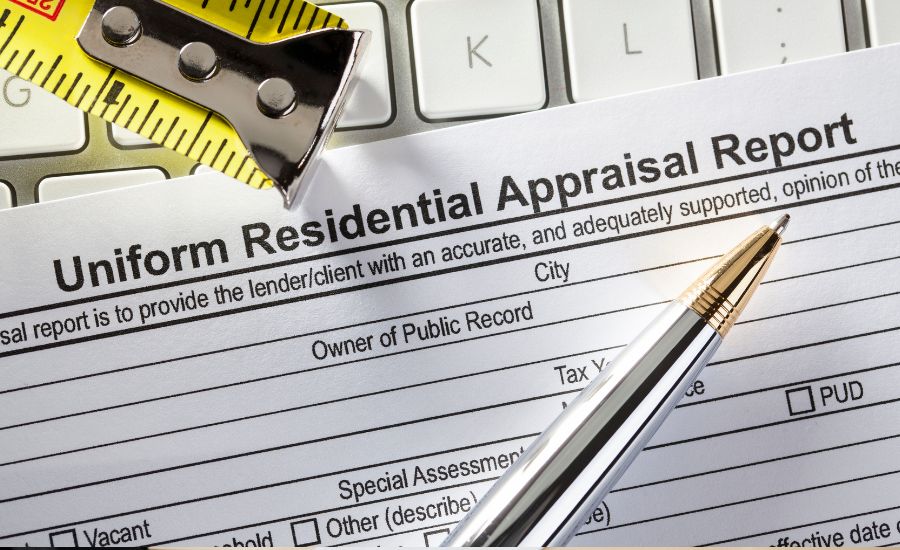
A real estate appraisal is an opinion of value prepared for a specific purpose, usually tied to a mortgage, refinance, estate, divorce, tax appeal, or private valuation need.
In a typical financed purchase, the lender may order an appraisal to help confirm that the property supports the loan amount. The Consumer Financial Protection Bureau explains that an appraisal describes what makes the property valuable and may show how it compares with other properties in the neighborhood. Buyers are also generally entitled to receive a copy of appraisals and other written valuations the lender obtains for a first-lien residential mortgage.
An appraiser is not simply looking at the Zestimate, the tax value, or the seller’s asking price.
A standard residential appraisal usually looks at:
- Recent comparable sales
- Location
- Site size and utility
- Property condition
- Quality of construction
- Square footage
- Bedroom and bathroom count
- Garage, parking, and storage
- Views, frontage, or setting when supported by the market
- Updates and deferred maintenance
- Functional layout
- Market conditions at the effective date of the appraisal
- Prior sales history and current contract details
The sales comparison approach is often central in residential appraisal work. Fannie Mae says appraisers must analyze the closed sales, contract sales, and listings most comparable to the subject property, then identify meaningful differences that could affect value. Fannie Mae also requires at least three closed comparable sales in the sales comparison approach for its appraisal reports.
That is where the work gets more complicated.
Two houses can have the same square footage and still appraise differently. One may sit on a better lot. One may back to a busy road. One may have a finished basement that buyers value differently than above-grade living space. One may have a stronger view, a newer roof, better maintenance, or a more useful garage. A waterfront property may depend heavily on shoreline, access, dock setup, slope, and actual usability.
A good valuation looks past the headline features.
 Why the tax assessment can be different
The tax assessment is usually the most misunderstood number.
In Montana, the Department of Revenue’s Property Assessment Division states that it values taxable property at 100 percent of market value. Montana’s property appraisal notice also identifies the department’s determination of the property’s 100 percent market value as of a specific valuation date, such as January 1, 2024 for residential, commercial, and industrial real property in the current cycle.
That date matters.
A buyer making an offer today is reacting to current inventory, current interest rates, current buyer demand, current condition, and current competition. A tax assessment may be tied to a mass appraisal cycle and public data. It may not fully reflect the way buyers respond to a remodeled kitchen, a steep driveway, dated finishes, deferred maintenance, a better view, or a competing home that just came on the market.
A tax value can be useful background. It should not be treated as the listing price.
Sellers sometimes say, “The state says it is worth this much.” Buyers sometimes say, “The tax value is lower, so the home is overpriced.” Both reactions can miss the point. The assessment has a tax purpose. A listing price has a market strategy purpose. A lender appraisal has a collateral purpose. Those are related, but they are not identical.
For a seller in Missoula, Lolo, Florence, Hamilton, Flathead Lake, or Georgetown Lake, the better question is how buyers are likely to compare the property against current alternatives.
Why a Realtor’s number can be different
A Realtor’s valuation usually comes through a comparative market analysis, often called a CMA.
A CMA is not the same as a formal appraisal. It is a pricing and market-positioning tool. The goal is to help a seller choose a list price or help a buyer decide whether an offer is supported by current market evidence.
A strong CMA should review:
- Recent closed sales
- Pending sales when available
- Current active competition
- Failed or expired listings
- Property condition
- Photos and presentation
- Lot, view, acreage, or frontage differences
- Updates that buyers are likely to notice
- Location within the neighborhood
- Buyer demand in that price range
- Timing and seller motivation
Realtors also look at buyer behavior. That is where a CMA can differ from an appraisal.
An appraiser is usually focused on a value opinion tied to the effective date and appraisal assignment. A Realtor is also thinking about how the market will react when the listing goes live. Will buyers see it as the best option in the range? Will it sit between two stronger homes? Will it look overpriced next to a home with better photos, better condition, or a more useful layout?
That is why a listing price can sometimes be slightly different from an appraised value. Pricing is partly about evidence and partly about strategy.
For example, a seller page should not be priced from tax value alone. It should be reviewed against recent sales, active competition, condition, timing, presentation, and buyer demand. If you are preparing to sell, Hyde & Associates can help you review that before the home hits the market: Sell Your Home With Hyde & Associates.
Why the homeowner’s number can be different
Homeowners often know the property better than anyone.
They know what was repaired, what was replaced, what they loved about the home, what the yard feels like in the evening, and how much money they have put into the property. That knowledge matters, but it does not always convert dollar-for-dollar into market value.
Buyers do not pay for every improvement equally.
A new roof may protect value. A kitchen update may help marketability. A finished garage may matter to one buyer and barely register with another. A high-end improvement that made sense for the owner may not create the same return when buyers compare the home against other listings.
There is also a net-number problem. Sellers often work backward from what they want to walk away with after mortgage payoff, repairs, commissions, taxes, moving costs, and their next purchase. That number may be emotionally or financially real for the seller, but the market still compares the home against alternatives.
A good pricing conversation respects the owner’s knowledge without letting it override market evidence.
The owner can say, “Here is what we changed.” The market decides how much buyers care.
Why the appraiser’s number can be different
An appraiser’s opinion can differ from a Realtor’s pricing range or a homeowner’s expectation because appraisers must support their work with market data and adjustments.
Fannie Mae says comparable sales from the same neighborhood are often the best indicator of value because those sales should reflect similar positive and negative location characteristics. Fannie Mae also says appraisers should provide fact-based, objective comments explaining the work performed and data sources used for market-supported adjustments.
That means the appraiser may care less about what a seller hoped to get and more about what the best comparable sales support.
A few common appraisal friction points:
- The contract price moved faster than closed sales can support.
- The appraiser used different comparable sales than the agent expected.
- A remodel was attractive but not strongly supported by similar sales.
- The property has acreage, waterfront, views, or outbuildings that are hard to compare.
- Active listings looked strong, but closed sales were weaker.
- Market conditions changed between the comparable sale date and the appraisal date.
- The property has condition issues that affect marketability.
- Seller concessions or financing terms affected comparable sale prices.
For unique Western Montana properties, this can get especially tricky. A standard subdivision home may have several nearby comps. A lakefront property, large-acreage home, cabin, or view property may have fewer clean comparisons.
That does not make the appraisal wrong by default. It means the report needs to be read carefully.
Why the purchase price can still be different from value
A purchase price is the amount one buyer and one seller agreed to under a specific set of terms.
That price can be influenced by:
- Competition
- Financing
- Cash strength
- Inspection terms
- Appraisal contingency language
- Closing date
- Seller concessions
- Repairs
- Buyer urgency
- Seller motivation
- Inventory shortage
- Emotional attachment
- Negotiation skill
The market value may support the purchase price. It may come in lower. Sometimes it may come in higher.
The CFPB notes that different valuations can happen during the mortgage process, and if an appraisal comes in well below the offered price, buyers may consider renegotiating or reviewing the appraiser’s work to understand how the value was reached.
That review should be specific. It should not be, “We do not like the number.”
A useful appraisal review looks for:
- Incorrect square footage
- Wrong room count
- Missing updates
- Incorrect property condition
- Better comparable sales that were not considered
- Sales used that may not be truly comparable
- Location differences
- Missed view, frontage, acreage, or site details
- Mistakes in concessions or financing terms
- Timing issues in a fast-moving market
If there is a real problem, the agent and lender can discuss whether a reconsideration of value is appropriate. The appraiser still needs supportable market evidence. Pressure, emotion, and wishful thinking do not fix a weak valuation file.
How buyers should think about value
Buyers should separate three questions.
First, do I like the home?
Second, does the price make sense compared with the alternatives?
Third, will the home support the financing and terms I need?
Those questions can lead to different answers. You may love a home and still decide the price is too aggressive. You may see a home priced above tax assessment and still find that recent sales support the asking price. You may be willing to pay more than the appraisal if you have cash to cover a gap, but that is a financial decision that should be reviewed carefully with your lender and advisor.
For buyers starting a search, use the listings as the first filter, then slow down on value. Compare buying with Hyde & Associates, current homes for sale, and area-specific pages like Miller Creek homes for sale, South Hills homes for sale, and Moose Can Gully homes for sale.
The right number depends on the specific property.
How sellers should think about value
Sellers should avoid building the price from one source.
Do not use only the tax assessment. Do not use only an online estimate. Do not use only what a neighbor listed for. Do not use only what you need to net. Do not use only the highest agent opinion if the data behind it is thin.
A better pricing review asks:
- What has actually sold nearby?
- Which homes are competing with this one right now?
- What condition differences will buyers notice?
- What does this home have that is hard to replace?
- What will buyers see as a weakness?
- Does the price create showing activity?
- Is the property likely to appraise?
- What happens if the first two weeks are quiet?
- What repairs or presentation work should happen before photos?
- What terms would make an offer stronger or weaker?
The first list price matters. A home that starts too high can lose early attention, then chase the market with reductions. A home that is priced with a clear strategy has a better chance of creating serious showings and cleaner feedback.
For a seller, the appraisal conversation starts before the appraisal is ordered. It starts with pricing the property honestly, presenting it well, and keeping a clean file of updates, repairs, permits when applicable, and property details that may help support value.
The best valuation uses more than one lens. No single number tells the whole story.
The tax assessment can give background.
The homeowner can explain the property history.
The Realtor can read current competition and buyer behavior.
The appraiser can provide a formal value opinion tied to lender requirements and market-supported comparable sales.
The final sale price shows what one buyer and seller agreed to under specific terms.
A careful real estate decision uses all of those numbers without confusing them.
Hyde & Associates can help buyers and sellers in Western Montana compare property value from the market side: recent sales, current listings, condition, location, buyer demand, and offer strategy. For formal mortgage valuation, the lender and appraiser control the appraisal process. For tax assessment questions, Montana property owners should review the Montana Department of Revenue resources and any applicable appeal process.
To talk through pricing, selling, or buying strategy, contact the team here: Contact Hyde & Associates.
Helpful external resources
Consumer Financial Protection Bureau: What are appraisals?
Fannie Mae: Comparable Sales
Fannie Mae: Adjustments to Comparable Sales
Montana Department of Revenue: Property Assessment
One Response